
如何选择适用于重型表面处理的单排结丝钢丝杯刷
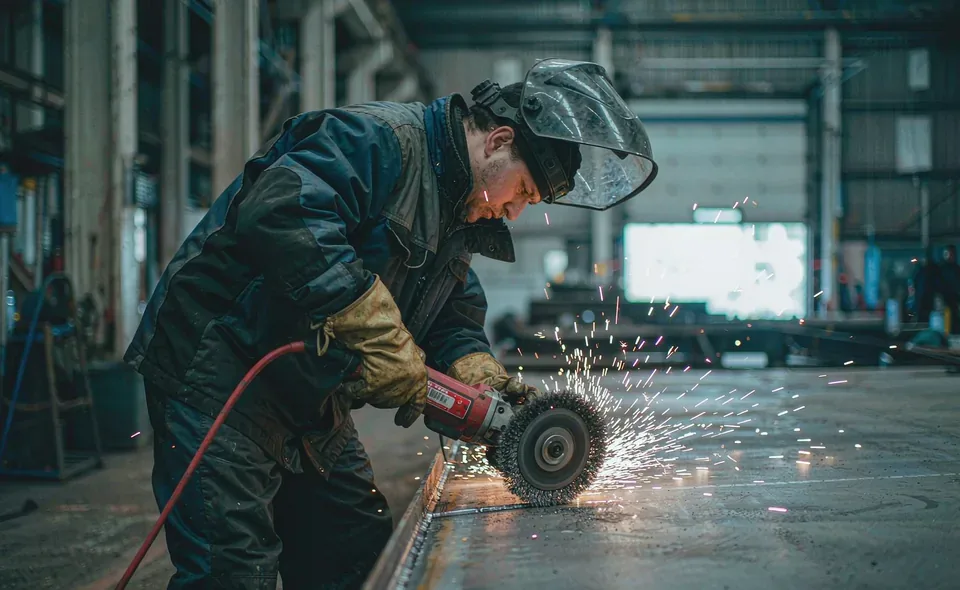
Weld slag that will not break free. Mill scale that laughs at a crimped brush. A wheel of wire that sheds half its fill in the first ten minutes and leaves the seam half-clean. These are the complaints we hear most often from fabrication shops, shipyards and pipe welding crews, and almost all of them trace back to the same cause: the brush was never matched to the job.
Crimped wire is fine for light cleaning, paint removal and blending. It is a finishing tool. When the work is weld slag, hot-rolled mill scale, heavy rust or thick epoxy on structural plate, crimped wire bends instead of cutting, the fill flattens, and the operator compensates by pushing harder — which overheats the wire, accelerates fatigue and throws broken filaments across the shop floor.
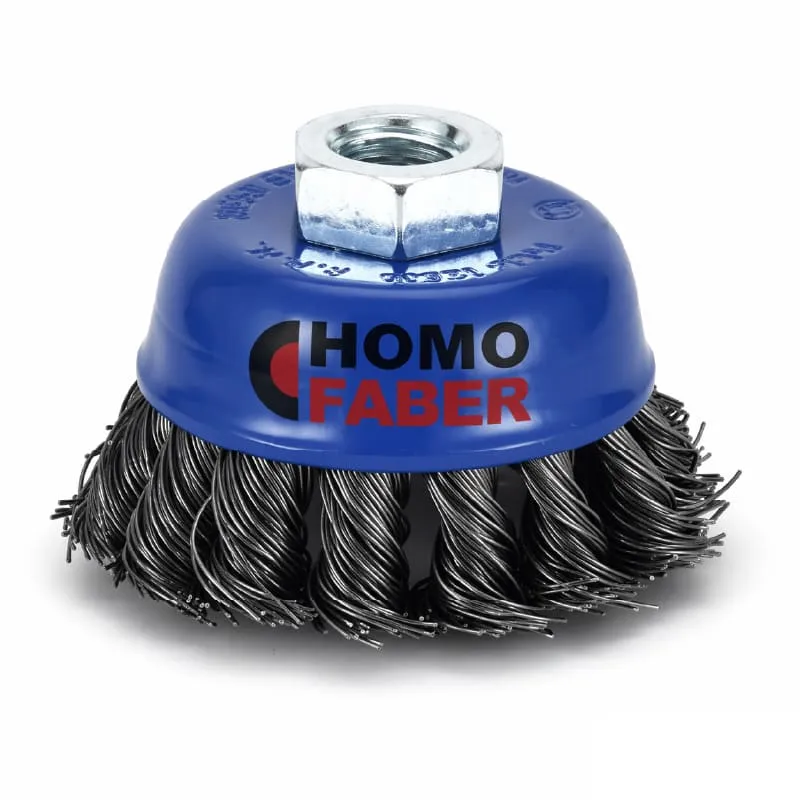
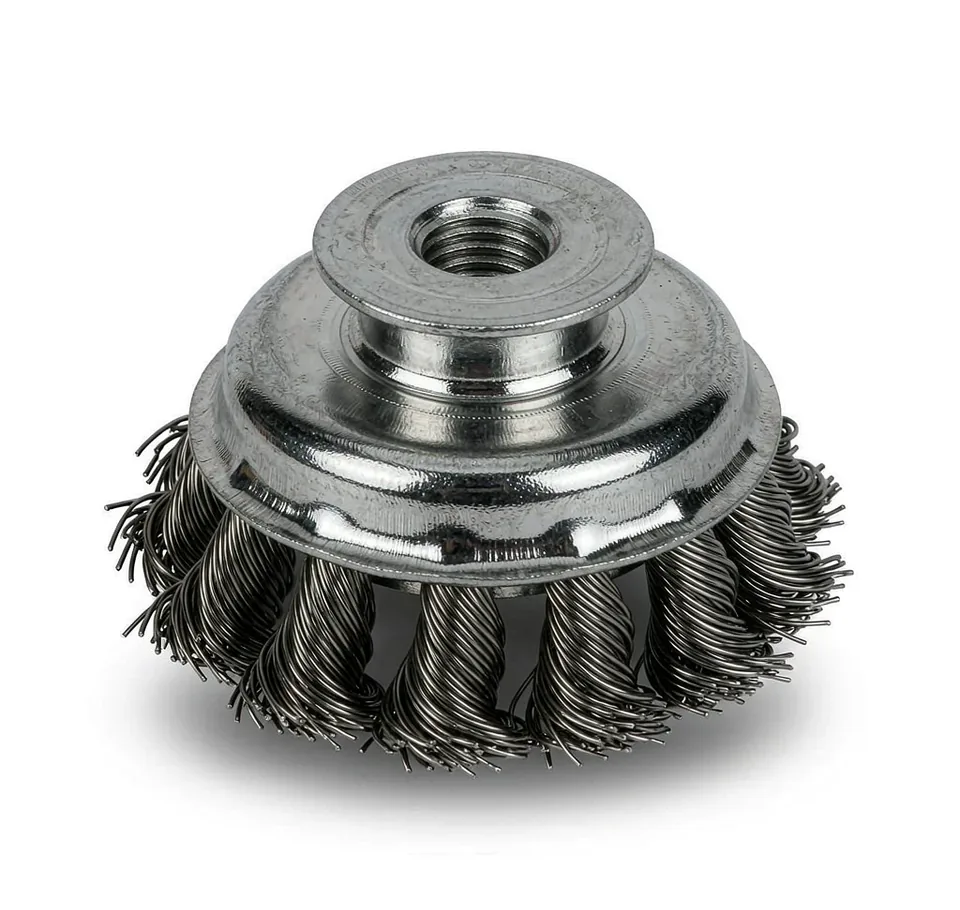
A single row knotted wire cup brush is built for that work. Each tuft is twisted into a solid cable-like knot, so the wire behaves like a small cutting cable rather than a flexible bristle. The result is a much higher impact force per contact point, far better resistance to permanent set, and a service life that holds up under real production pressure.
Why Single Row Knotting Cuts Faster Than Crimped Wire
Three mechanical differences explain the performance gap:
- Beam strength. Twisting 20–30 filaments into a knot roughly multiplies the section modulus of the tuft. The tuft resists bending, so the grinder’s torque is delivered to the tip as cutting impact instead of being absorbed by deflection.
- Self-sharpening tips. As knot tips wear, the twist geometry keeps breaking down at the perimeter, exposing fresh, sharp wire ends rather than a rounded “mushroom” face.
- Open structure. Fewer, thicker knots leave open space between them. Debris clears instead of packing, which is what kills a densely filled brush on scale and rubbery coatings.
Wire Material: High-Carbon Steel vs. 304 Stainless vs. Brass-Coated Steel
Choosing wire material is the single most consequential decision in the specification. It controls cutting rate, service life, and — critically — whether you contaminate the workpiece.
High-Carbon Steel Wire
Oil-tempered high-carbon wire (typically 0.6–0.8 % C) offers the highest tensile strength of the three, in the region of 1,800–2,200 MPa. It cuts hardest, holds a sharp tip longest, and is the lowest-cost option per unit of metal removed. The trade-offs are straightforward: it rusts in storage and in humid shipping containers, and it deposits ferrous residue into the work surface.
304 Stainless Steel Wire
Austenitic 304 wire runs lower on strength — roughly 1,400–1,700 MPa in brush gauges — so it cuts less aggressively and wears faster. What you buy with the premium is freedom from cross-contamination. No free iron is transferred to the workpiece, so there is no subsequent rust blooming and no risk of initiating pitting corrosion on stainless or duplex components. For food processing equipment, pressure vessels, pharmaceutical pipework and marine hardware, this is not a preference; it is usually written into the weld procedure specification.
Brass-Coated Steel Wire
Brass-coated wire is a high-carbon steel core with a thin electroplated brass layer (typically 1–3 µm). The coating improves shelf appearance, slows storage corrosion in high-humidity logistics, and slightly reduces friction and sparking in the first minutes of use. It does not change the mechanical behaviour of the brush, and it is not a contamination barrier — the brass layer is gone within the first couple of minutes of contact. Treat it as a general-purpose, better-looking carbon steel brush, and never specify it for corrosion-critical stainless work.
Material-to-Workpiece Selection Table
| Wire material | Tensile strength (typical) | Cutting rate | Relative service life | Cross-contamination risk | Recommended workpiece | Do not use on |
|---|---|---|---|---|---|---|
| High-carbon steel | 1,800–2,200 MPa | Highest | Longest | High — deposits free iron | Carbon steel, structural plate, cast iron, ship hull plate, general weld cleaning | Stainless steel, aluminium, titanium, Inconel, any surface requiring post-weld corrosion resistance |
| 304 stainless steel | 1,400–1,700 MPa | Moderate | Shorter — commonly 30–50 % faster wear than carbon wire under equal feed force | None | 304/316 stainless, duplex, aluminium, non-ferrous alloys, food-grade and pharmaceutical fabrication | Not economic on plain carbon steel where contamination is irrelevant |
| Brass-coated steel | Core 1,800–2,000 MPa | High | Long | High once coating wears (minutes) | Mixed carbon steel work, general maintenance, distributors needing shelf-stable stock in humid climates | Corrosion-critical stainless; any job where the spec calls for non-ferrous wire |
All figures are typical values for brush-grade wire. Always confirm against the manufacturer’s datasheet and run your own coupon tests before committing to volume.

Key Specifications That Drive Cutting Rate and Service Life
Wire Diameter: 0.35 mm vs. 0.50 mm
Wire gauge is the coarsest control you have over the aggressiveness-to-finish ratio.
| Wire diameter | Approx. inch | Cutting action | Base-metal removal | Typical application |
|---|---|---|---|---|
| 0.30 mm | .012″ | Light, cool, fine scratch pattern | Very low | Light spatter, thin sheet (< 2 mm), cleaning before dye penetrant or MPI inspection |
| 0.35 mm | .014″ | Moderate; good balance | Low | Weld spatter, light scale, paint and coating removal, general pre- and post-weld cleaning |
| 0.50 mm | .020″ | Aggressive, high impact | Moderate | Weld slag, hot-rolled mill scale, heavy rust, thick plate, root pass cleaning |
| 0.55–0.60 mm | .023″ | Very aggressive | High | Concrete form cleaning, heavy corrosion on structural sections, foundry work |
Practical rule: go as fine as the job allows. A 0.50 mm brush on 2 mm sheet will gouge, overheat the substrate and stall a small grinder. A 0.35 mm brush on heavy slag will simply work slowly and wear out early. Where a shop runs mixed work, stocking both gauges costs less than losing operator time.
Arbor Thread: M14 x 2.0 vs. 5/8″-11
Thread mismatch is the most common reason a brush cannot be mounted safely, and stacked adapters are the most common cause of runout and premature failure.
- M14 x 2.0 — metric standard, dominant in Europe, Asia, the Middle East and on most 100–125 mm grinders sold outside North America.
- 5/8″-11 UNC — North American standard, also common on US-spec equipment worldwide.
- M10 x 1.25 / M10 x 1.5 — found on compact 100 mm grinders in some Asian markets; verify before ordering.
- 7/8″ and larger bores — heavy-duty and bench/dedicated machines.
Specify the thread on the purchase order, not the brush diameter. A cup brush is either supplied with an integrated threaded nut or as a plain-bore cup with a separate flange nut set; the integrated nut version eliminates one assembly variable and is preferred for high-RPM production use.
Knot Geometry and Trim Length
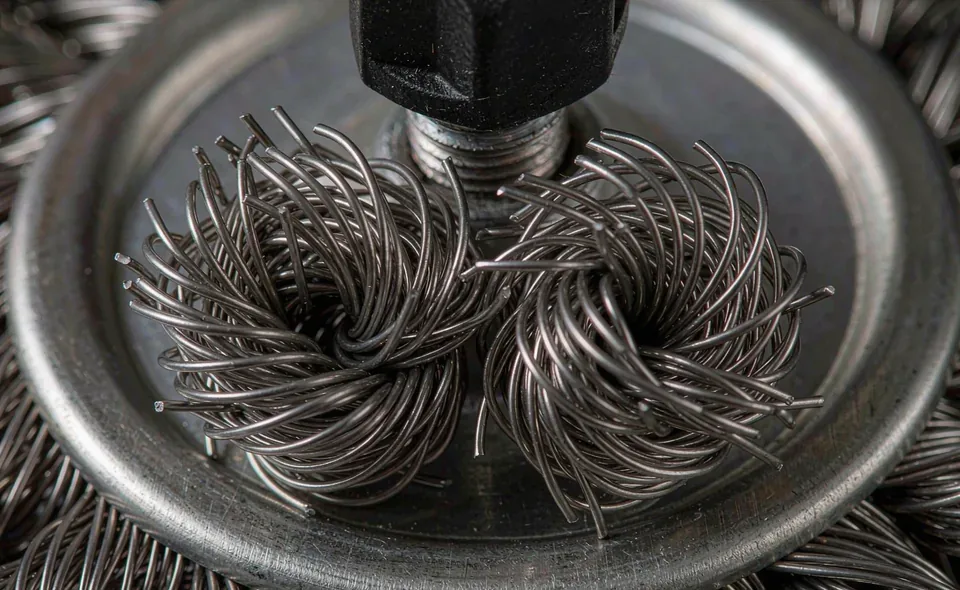
Knot geometry covers the number of knots, the filaments per knot, the twist pitch, and the exposed trim length.
- Knot count (typically 8–14 on 65–100 mm cups). More knots mean more cutting points, a finer scratch pattern and a brush that tracks better on flat plate. Fewer knots leave more open space, resist clogging on coatings and uneven surfaces, and give longer effective reach.
- Twist pitch. A tighter twist produces a stiffer, more aggressive knot with longer life; a looser twist is more conformable on contoured welds and fillets.
- Trim length (typically 22–28 mm). Longer trim is more flexible and reaches into corners, fillets and inside pipe; it also deflects more under load, which reduces impact force. Short trim is stiffer and more aggressive but wears out sooner.
Speed Rating by Brush Diameter
| Brush diameter | Common arbor thread | Typical max. free speed | Fits grinder |
|---|---|---|---|
| 65 mm (2-1/2″) | M14 x 2.0 / 5/8″-11 | 14,000 RPM | 100–125 mm |
| 75 mm (3″) | M14 x 2.0 / 5/8″-11 | 12,500 RPM | 100–125 mm |
| 100 mm (4″) | M14 x 2.0 / 5/8″-11 | 9,000 RPM | 125–150 mm |
The rating stamped on the cup must equal or exceed the grinder’s no-load speed. Variable-speed grinders are worth specifying for mixed work: running a brush at the low end of its range extends life and reduces wire throw.
Buyer’s Checklist: Five Checks Before You Order
- Match wire to base metal, and enforce it on the floor. Never use a carbon steel or brass-coated brush on stainless steel, aluminium or titanium. Free iron embedded in the surface will rust, stain and can initiate pitting. Keep stainless brushes physically segregated — a different colour cup or a marked storage rack — so operators cannot mix them by accident.
- Confirm thread and speed compatibility on the PO. State the arbor thread and the grinder’s no-load RPM. Never stack adapters or use a damaged spindle. Use a brush with an integrated threaded nut where the grinder allows it.
- Select wire gauge from the removal requirement, not habit. 0.50 mm for slag, scale and heavy rust on plate above roughly 4 mm. 0.35 mm for spatter, coatings, thin sheet and pre-inspection cleaning.
- Choose single row vs. double row by geometry. Single row for edges, corners, fillets, inside pipe, uneven surfaces and maximum aggression per contact. Double row for long flat runs where coverage and total life matter more than reach.
- Ask for the datasheet, then test. Require: steel grade and wire tensile, wire diameter and tolerance, knot count and trim length, filament count per knot, hub construction, balance class, and the RPM stamped on the cup. Then run three sample brushes on your own weld coupons and measure cleaning time per metre against your current product. That number, not the unit price, is what determines your real cost.
Safe Operating Practice and Applicable Standards
- Respect the speed rating. Never exceed the RPM marked on the brush, and never fit a brush to a grinder whose no-load speed exceeds that rating.
- Run-in before contact. After mounting, run the brush at operating speed for at least one minute in a guarded position, standing clear of the plane of rotation. This is the practice set out in ANSI B165.1 (Safety Requirements for the Design, Care and Use of Power Driven Rotary Wire Brushes).
- Use the guard. Keep the grinder guard fitted. Where the cup diameter exceeds the guard, use a dedicated wire brush guard or a brush with an integral guard.
- Let the tips work. Hold the brush at roughly 15–30° to the surface so the wire tips contact the work, and apply only enough feed force to keep them cutting. Burying the cup overloads the wire, generates heat that tempers and weakens the filaments, and is the primary cause of wire throw.
- Wear full PPE. Face shield over impact-rated safety glasses, heavy leather gloves, hearing protection, flame-resistant clothing with no loose cuffs, enclosed footwear, and respiratory protection where coatings or lead paint are involved.
- Inspect before every use. Discard any brush with cracked or deformed cup, stripped threads, or knots that have broken back into the cup body.
- Store dry. Hang or lay flat in low humidity. Crushed knots and rusted wire both shorten life and increase throw risk.
Where a formal compliance file is required, specify brushes declared to EN 1083-2 (safety requirements for power-driven brushes) and ANSI B165.1, and request the supplier’s declaration plus the oSa-recommended marking on the product.
Frequently Asked Questions
What is the difference between a single row and a double row knotted cup brush?
A single row brush has one ring of large knots around the cup rim. It delivers higher impact per contact point, clears debris faster, and reaches into corners, fillets and inside pipe because the knots are widely spaced and the trim is effectively longer. A double row brush adds a second, staggered ring of knots, roughly doubling the cutting points in contact at any moment. That gives faster coverage and longer total life on flat plate, but less reach, more heat build-up and a higher chance of clogging on coatings. For weld seam work and confined geometry, single row is the right default; for long flat runs of plate, double row is usually more economical.
How can I stop the brush from throwing wires?
Wire throw is almost always an operating problem rather than a product defect. Four controls cover most cases: stay at or below the rated RPM; hold the 15–30° working angle and let the tips cut instead of pressing the cup flat into the work; mount the brush square on a clean, undamaged spindle with full thread engagement, then run it in for one minute; and inspect before use, rejecting any brush with knots already broken back into the cup. Also check the grinder itself — worn spindle bearings and a bent arbor produce runout that breaks wires regardless of brush quality.
When is a 304 stainless wire brush worth the extra cost?
Whenever the workpiece is stainless, duplex, aluminium, titanium or a nickel alloy, and whenever the completed fabrication must pass a corrosion or product-contact specification. The brush itself costs more and wears faster, but rework from free-iron contamination — grinding out rust bloom, re-passivating, or rejecting a spool of pipe — costs far more. On plain carbon steel where nobody cares about surface iron, a high-carbon brush is the correct, lower-cost choice.
Get Specifications, Bulk Pricing and Samples
We manufacture single row knotted wire cup brushes in 65 mm, 75 mm and 100 mm diameters, in high-carbon steel, 304 stainless and brass-coated wire, with M14 x 2.0 and 5/8″-11 arbors and 0.30–0.60 mm wire gauges. OEM branding, custom knot counts and private-label packaging are available for distributors and importers.
Send us your grinder model, base metal, wire gauge requirement and monthly volume, and our engineering team will return a specification sheet, FOB pricing and a recommended configuration within one business day. Sample brushes are free for qualified industrial buyers — run them on your own weld coupons and compare cleaning time against your current supplier before you commit to a container.
Contact our technical sales team → Request a Quote / Download the Specification Sheet